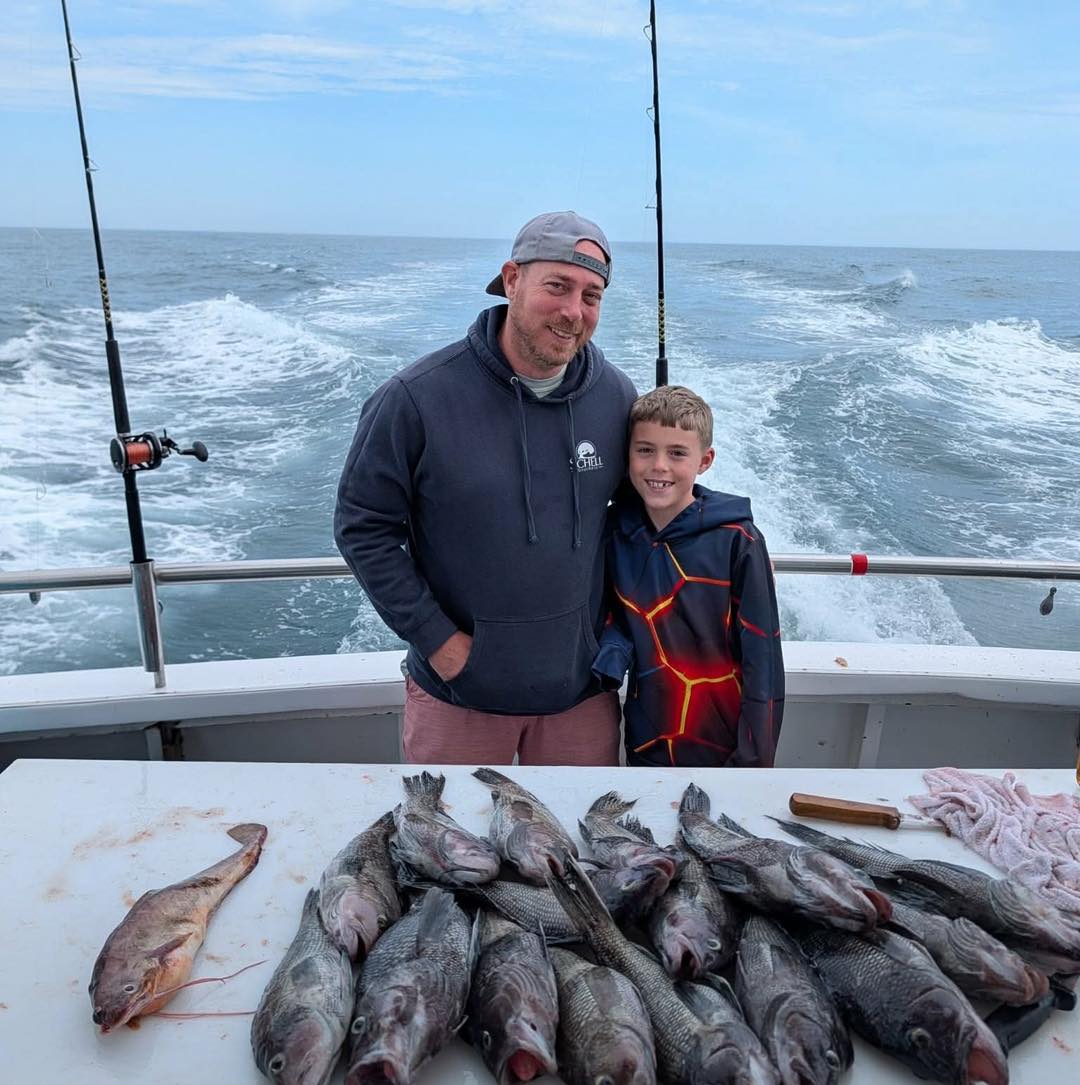
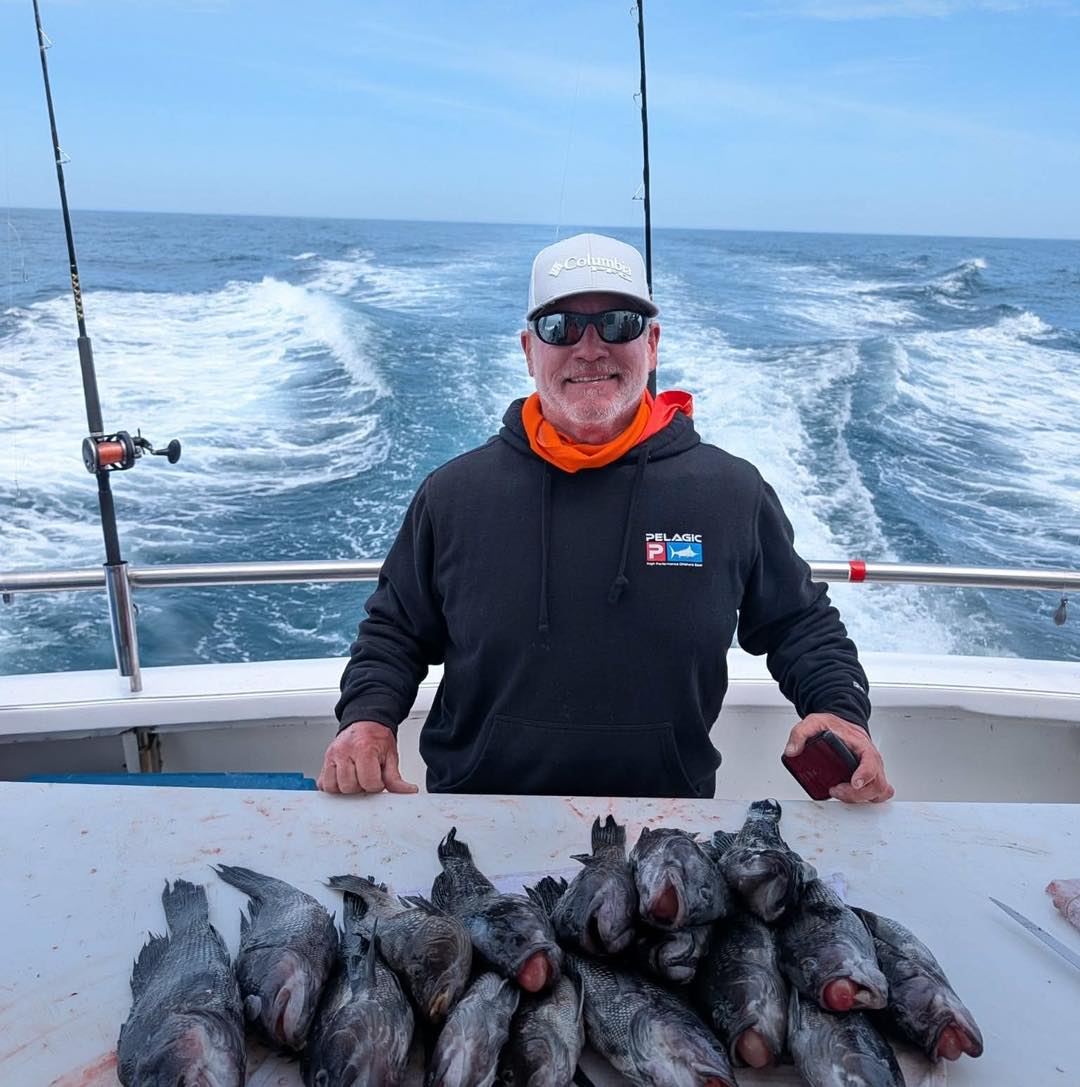
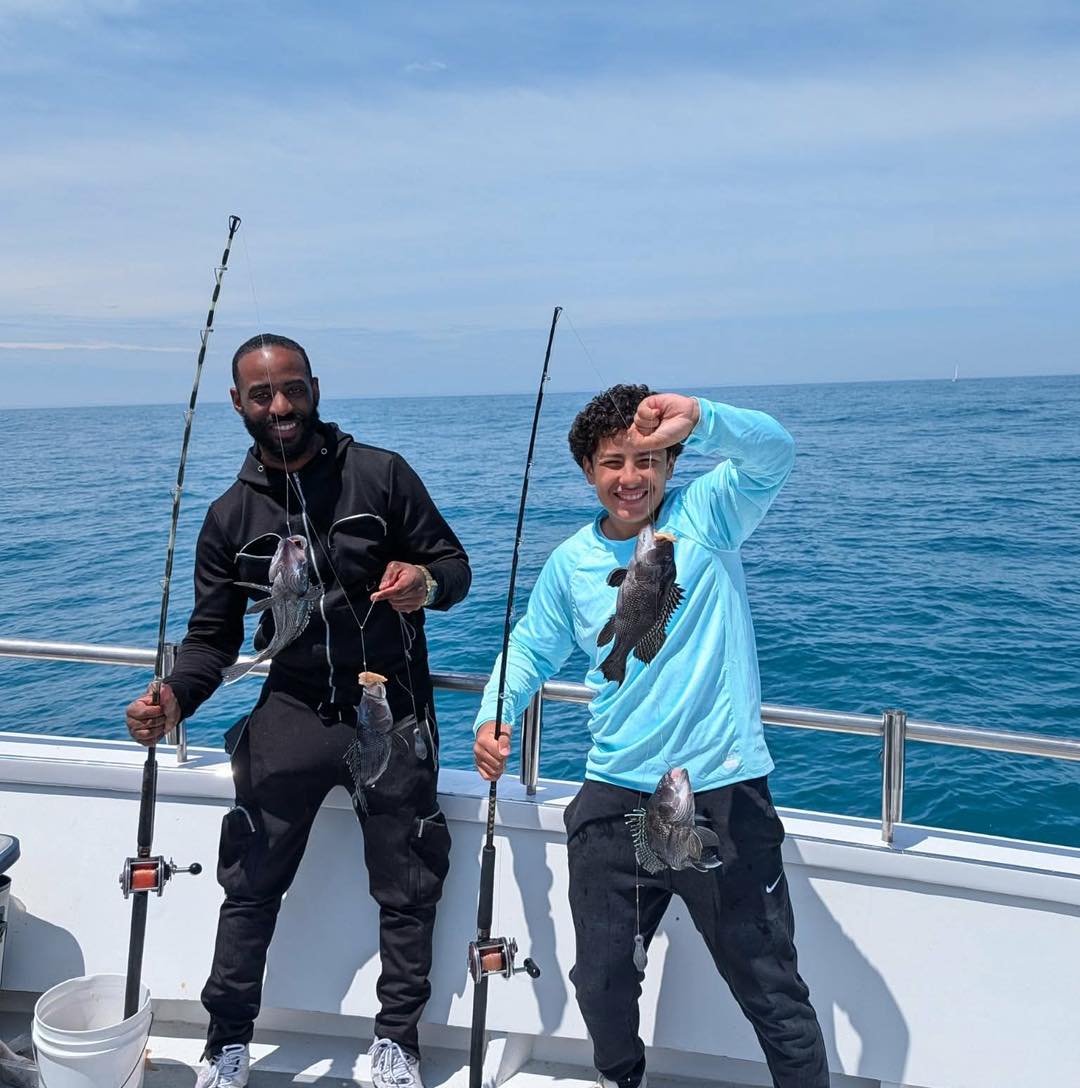
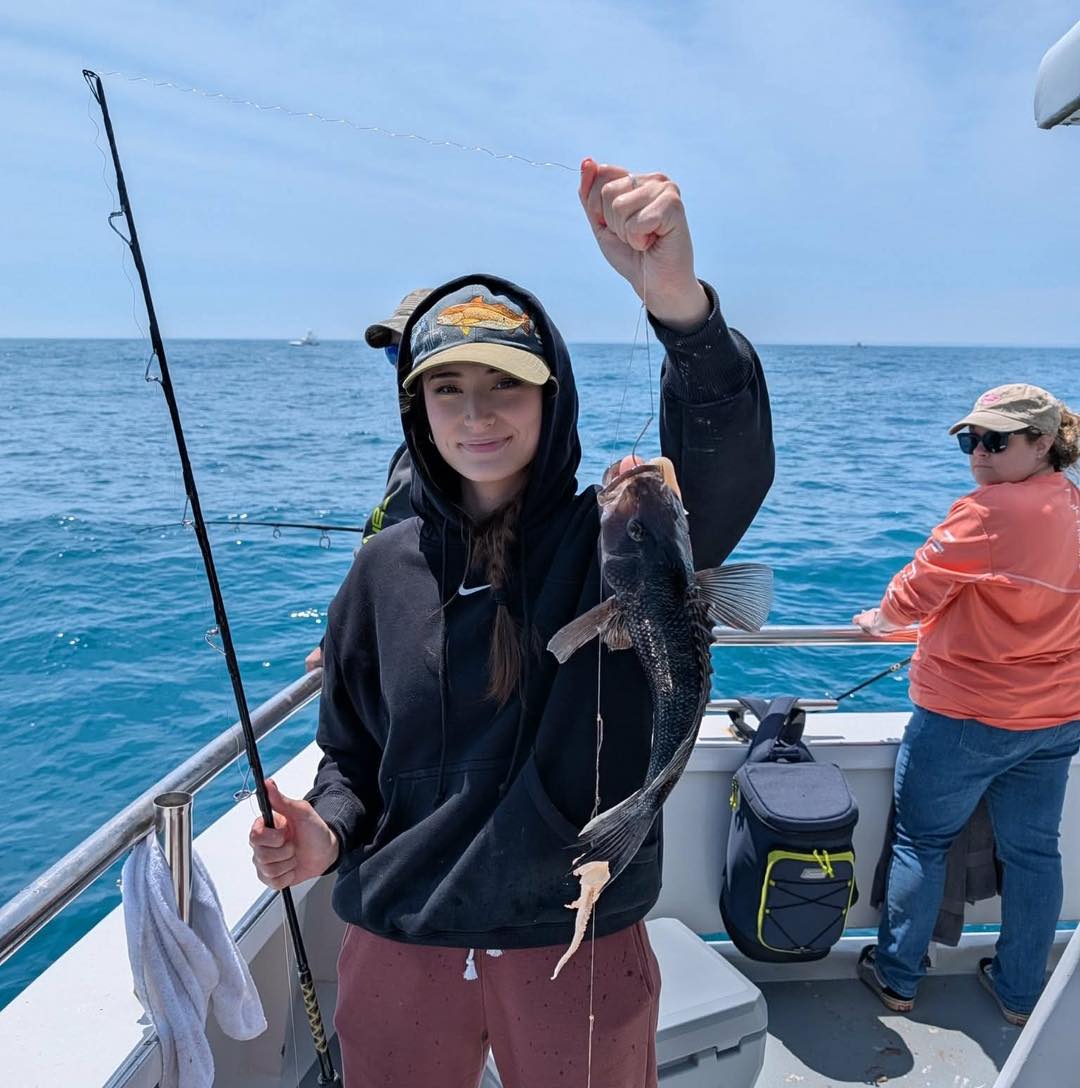
It was a pretty awesome weather day today with sunny skies, light winds and very warm temperatures and there were plenty of folks out taking advantage of it. Tomorrow looks like more of the same, but then the wind starts to blow up and starting late next week it looks like some rain. Get out and enjoy the weather when it’s nice.
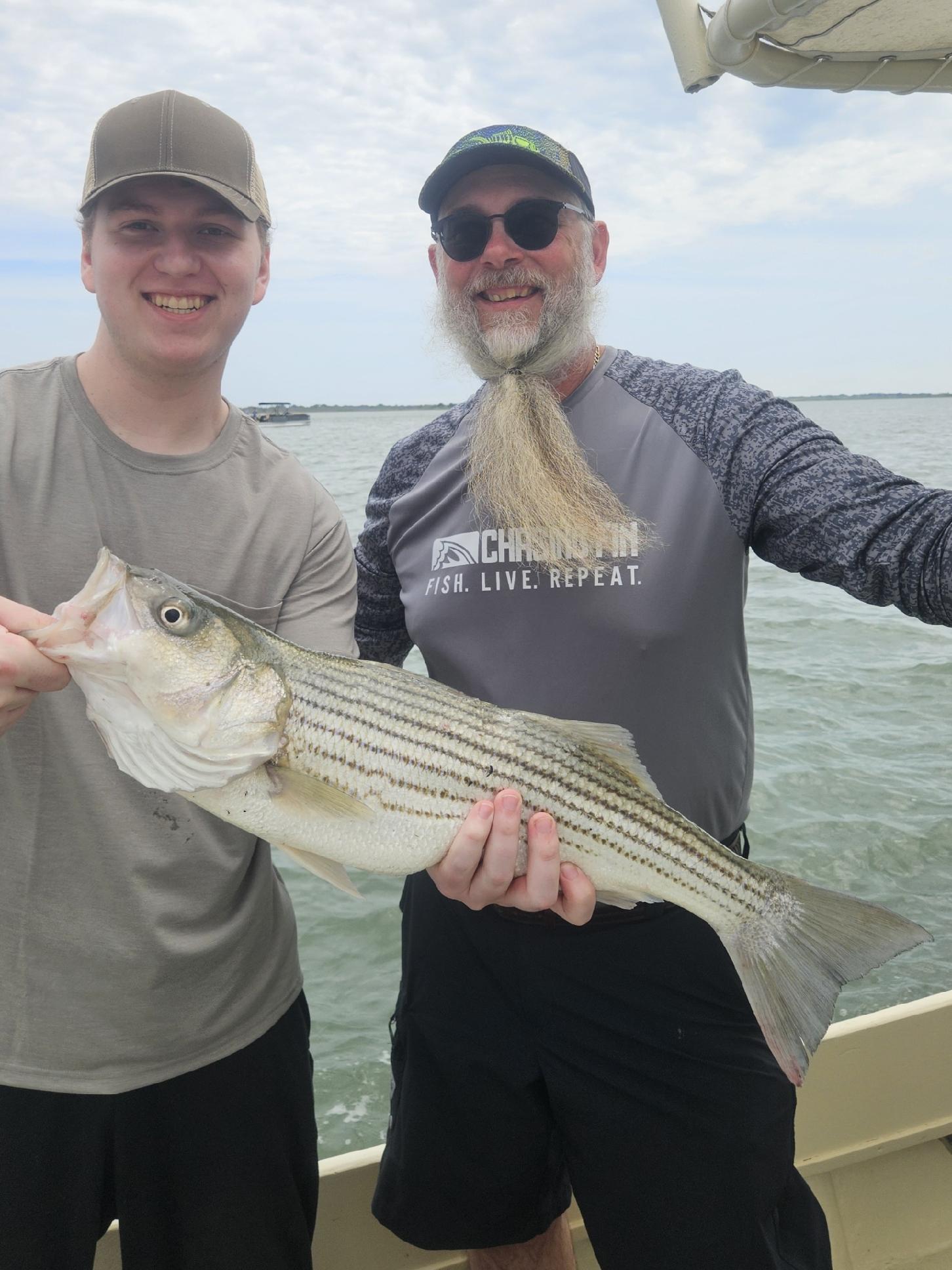
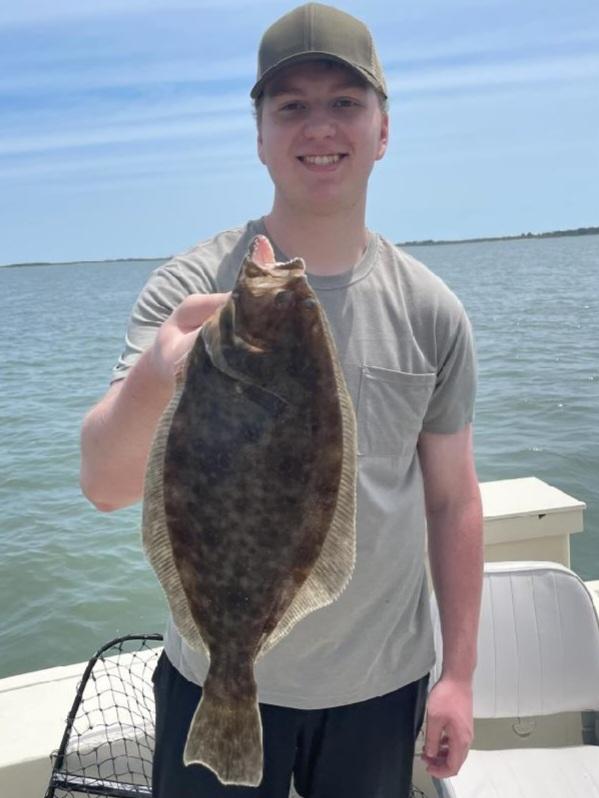
Captain Jason Mumford of Lucky Break Charters had a nice day of fishing for his anglers today with a keeper sized striper and a keeper sized flounder as well.
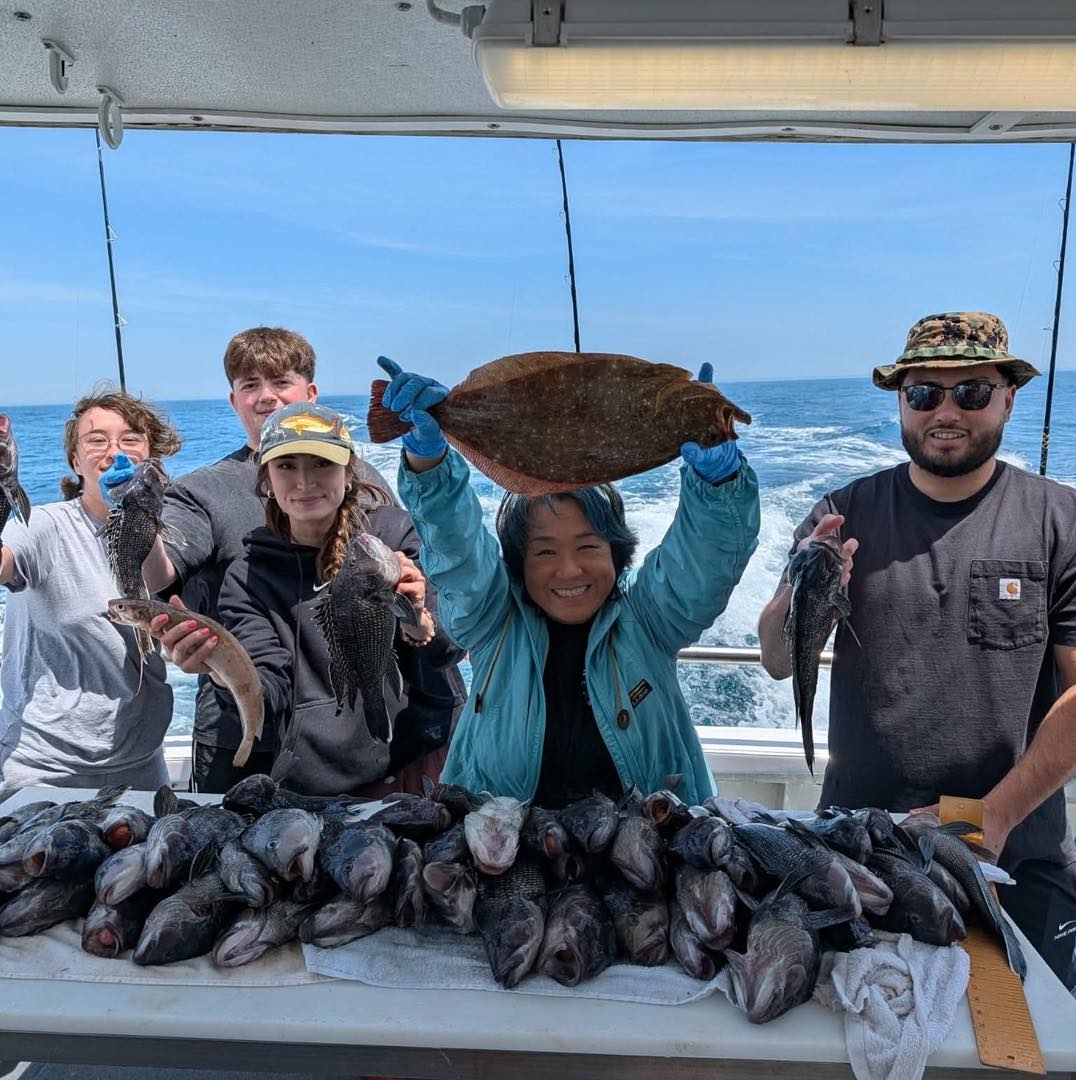
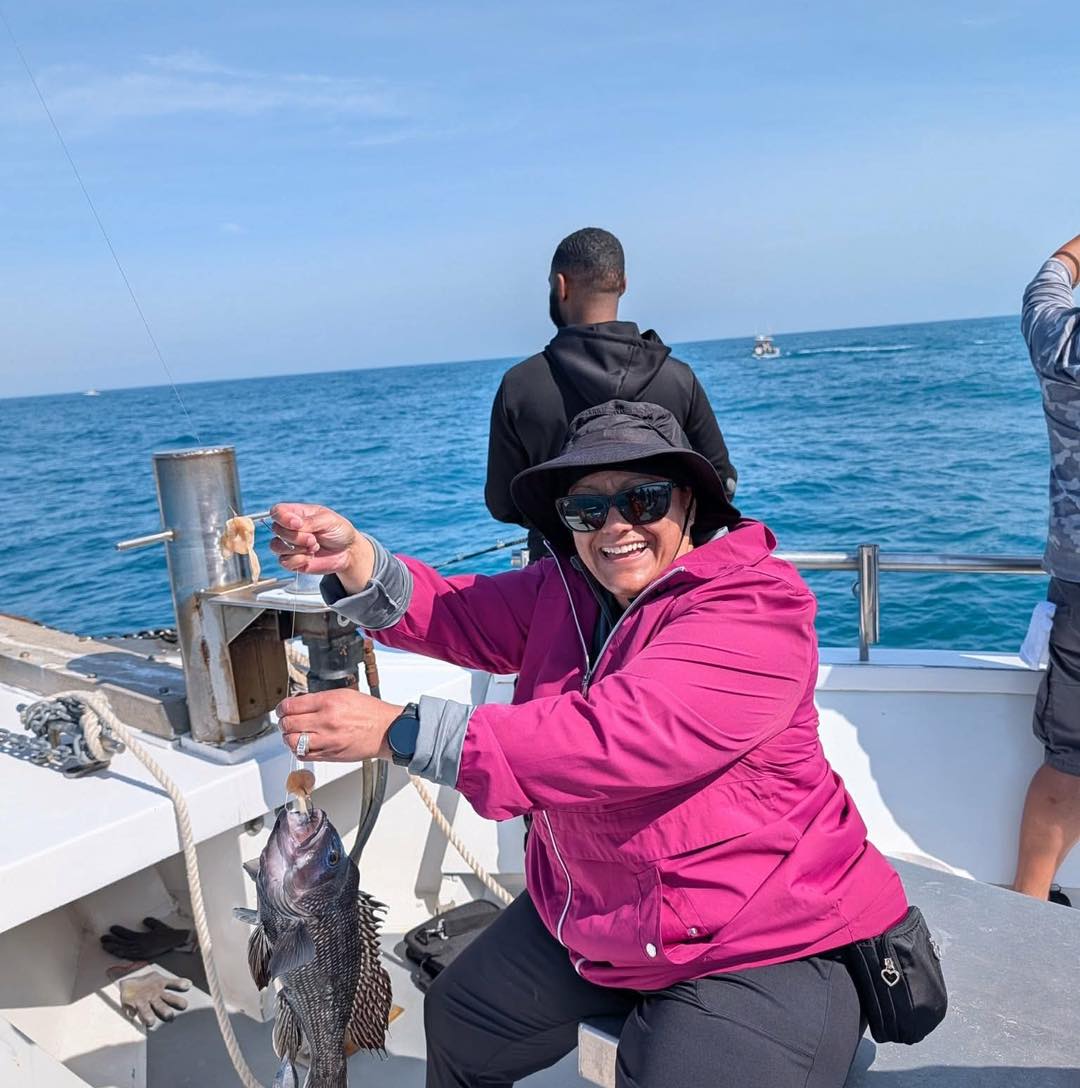
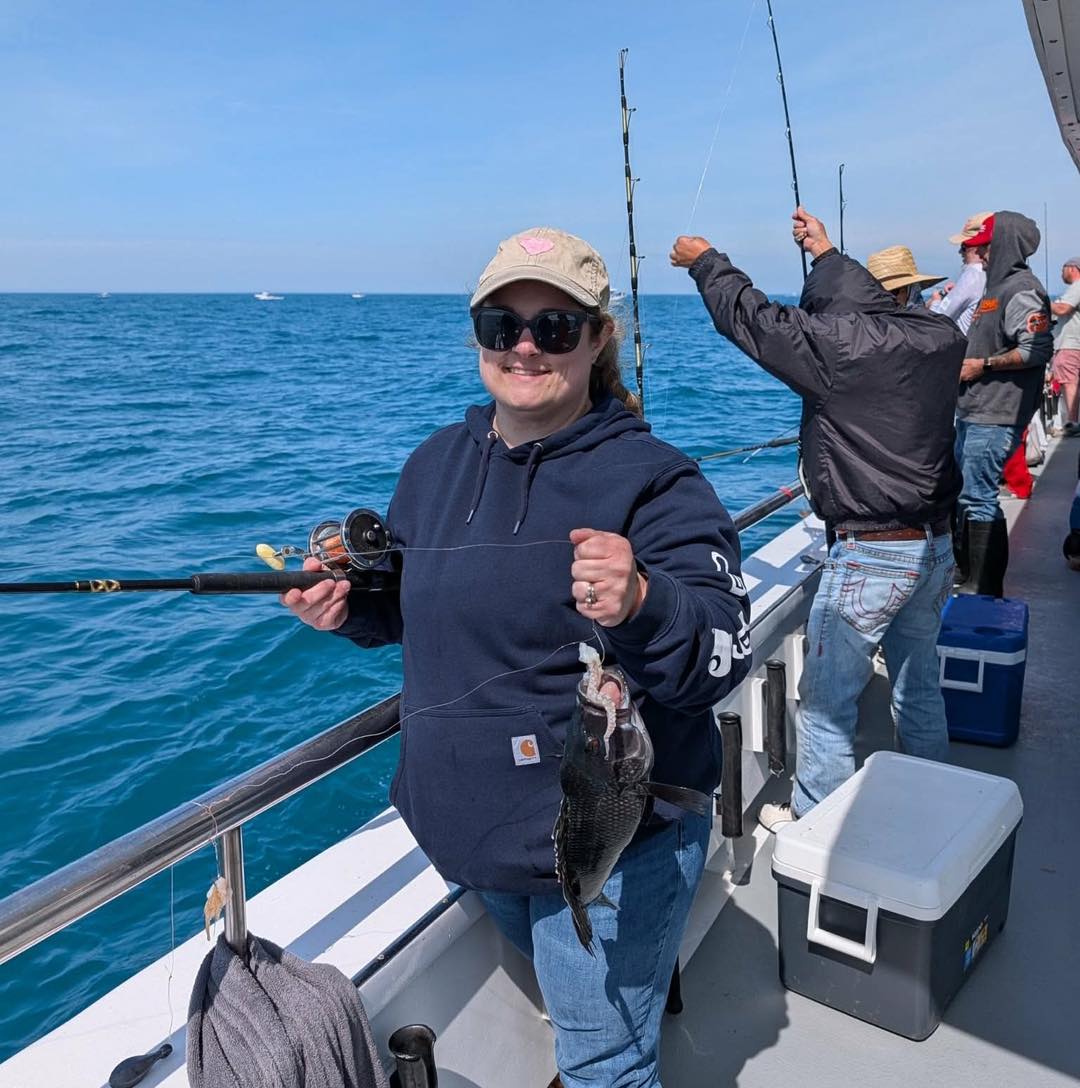
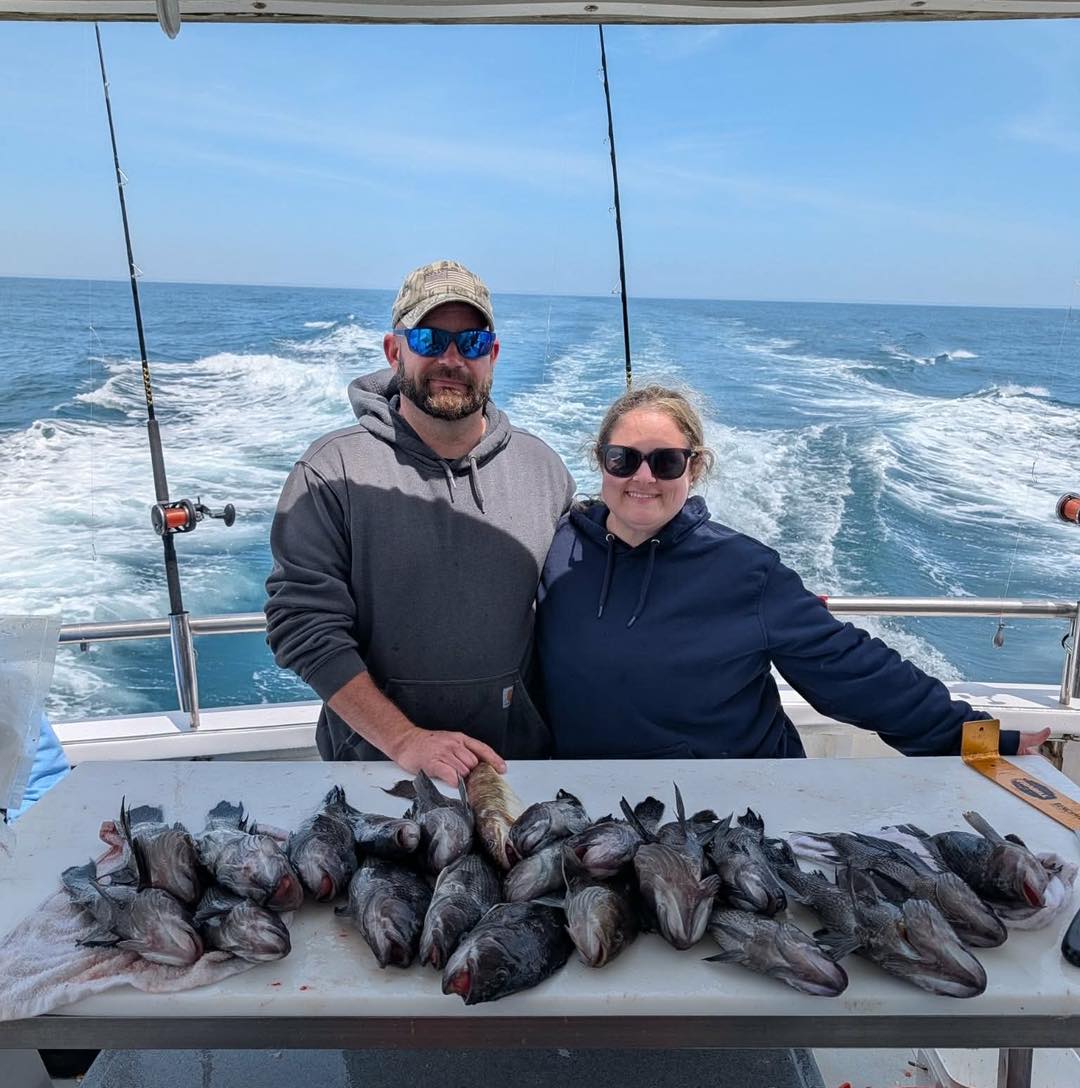
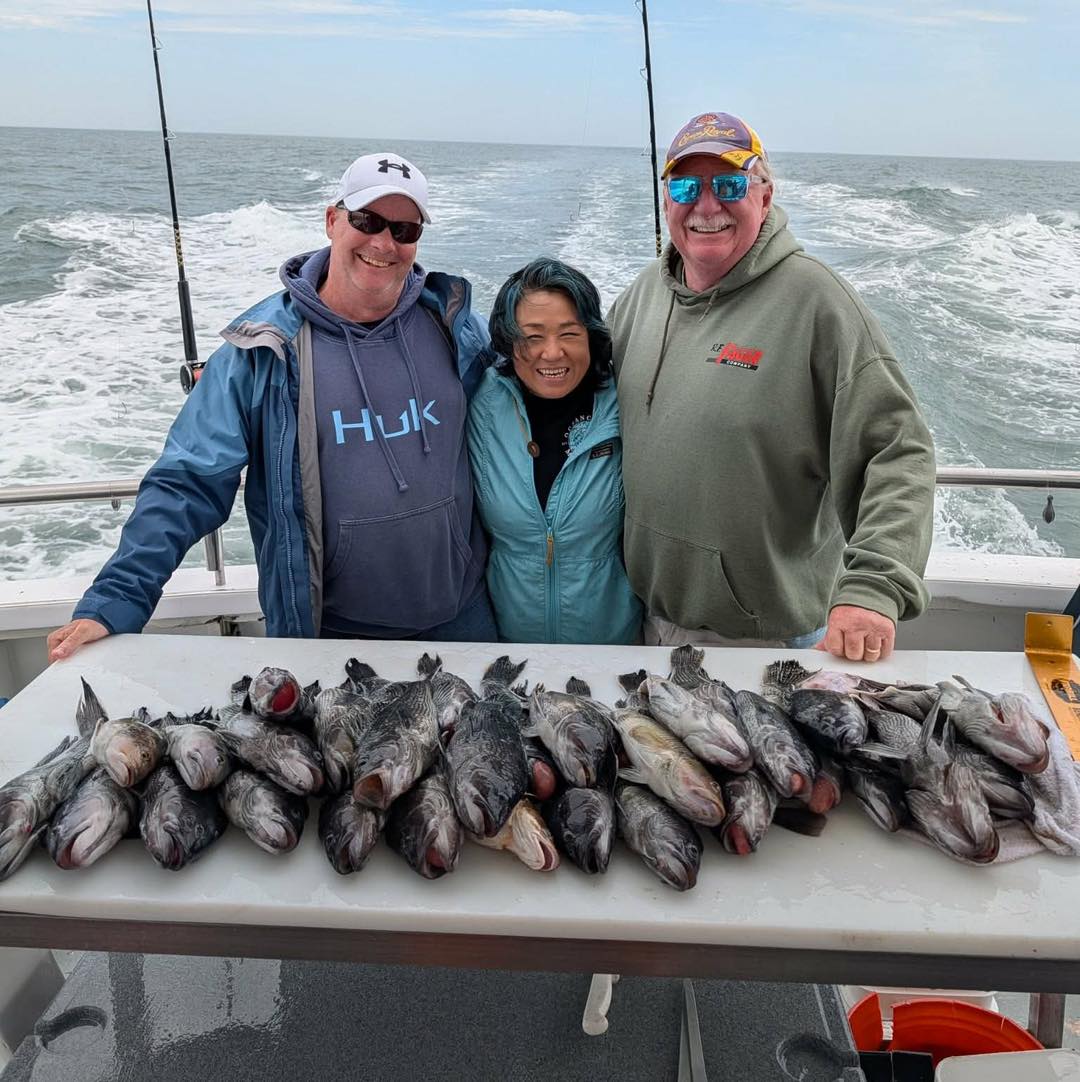
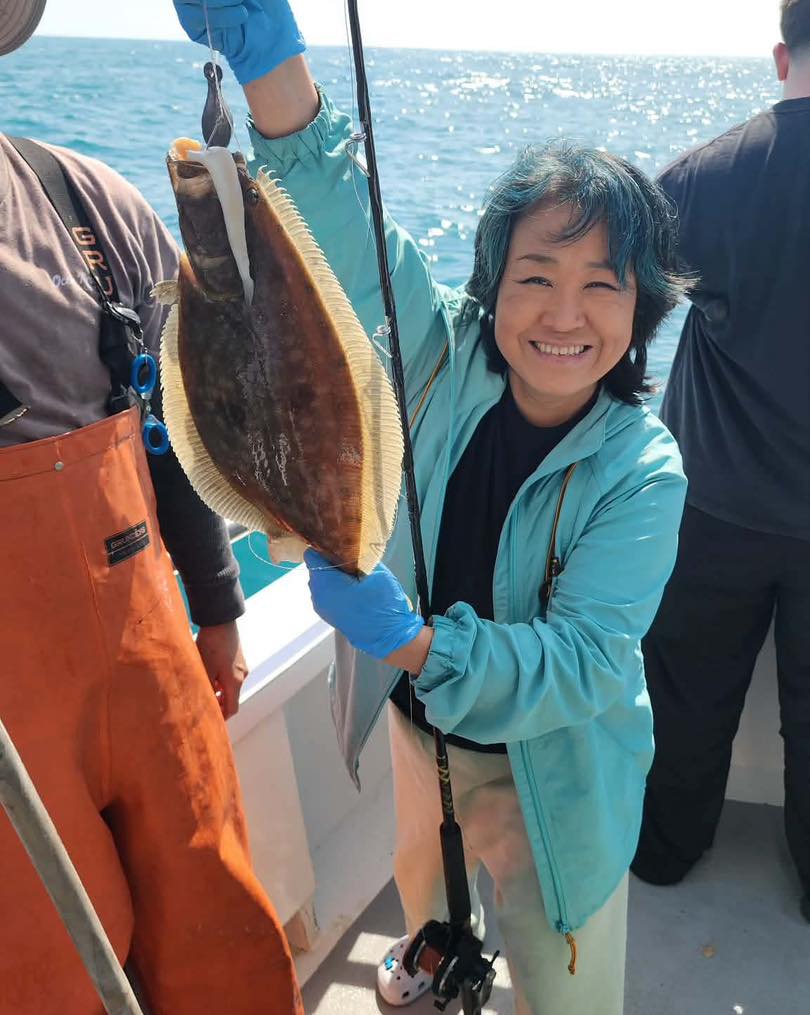
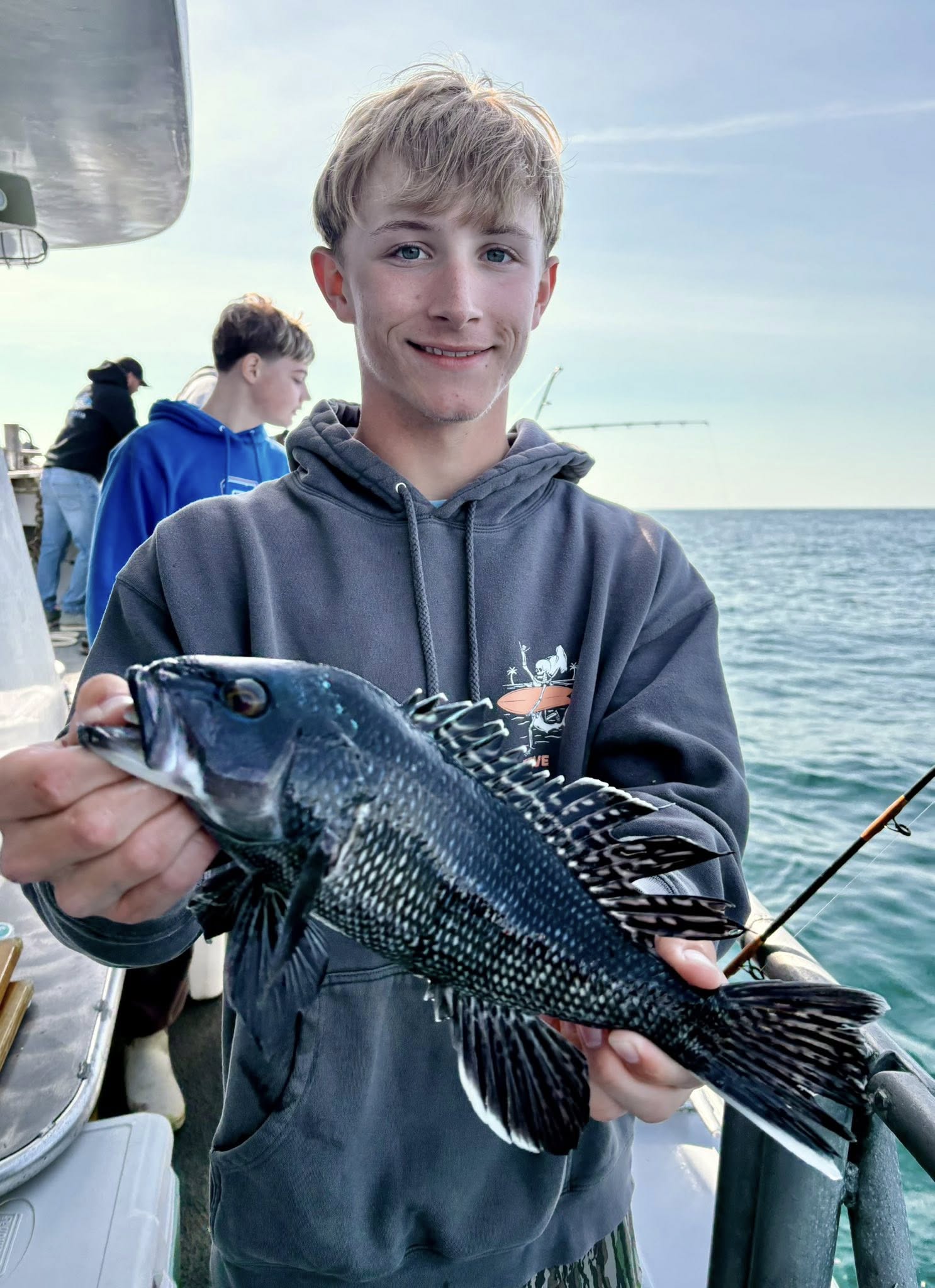
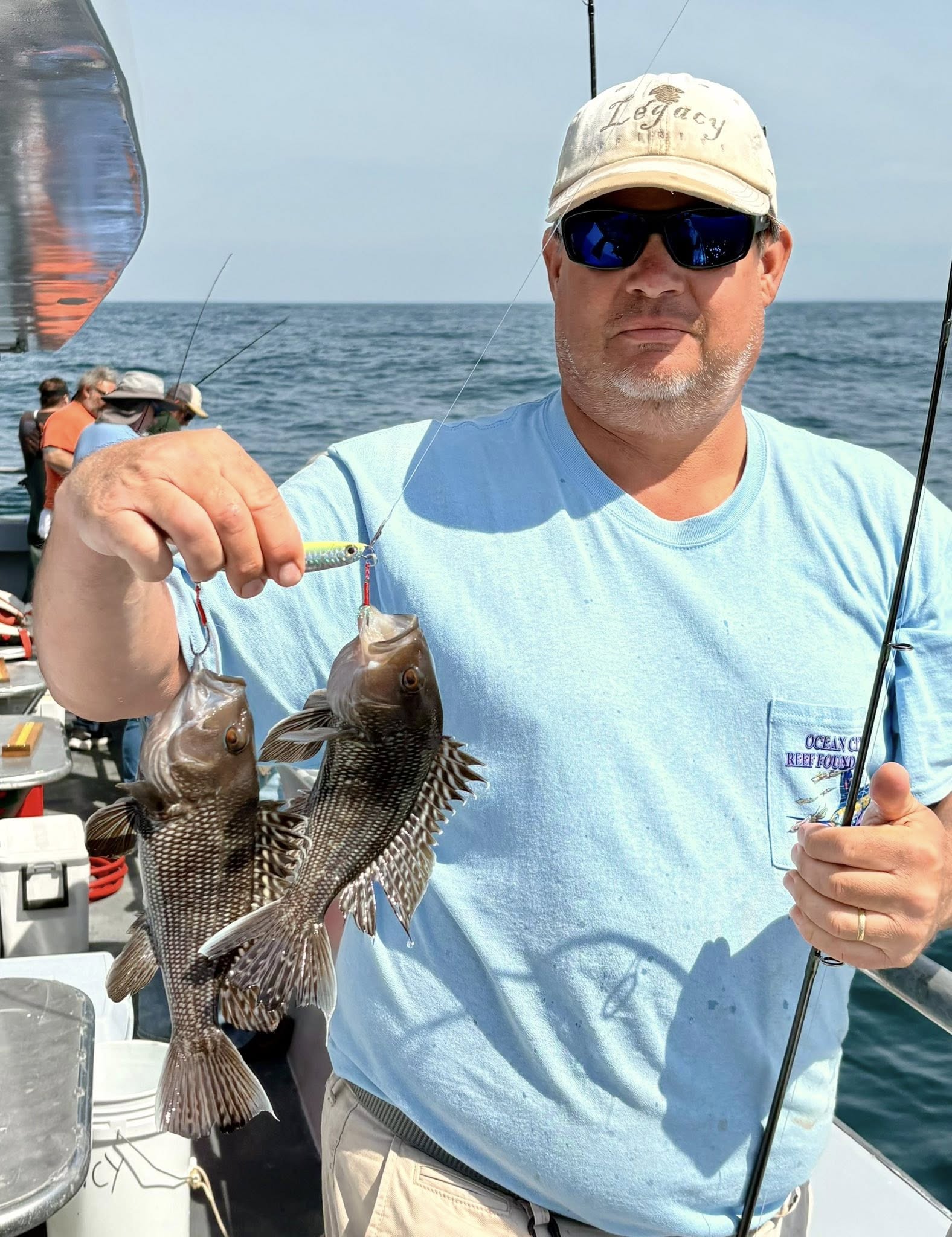
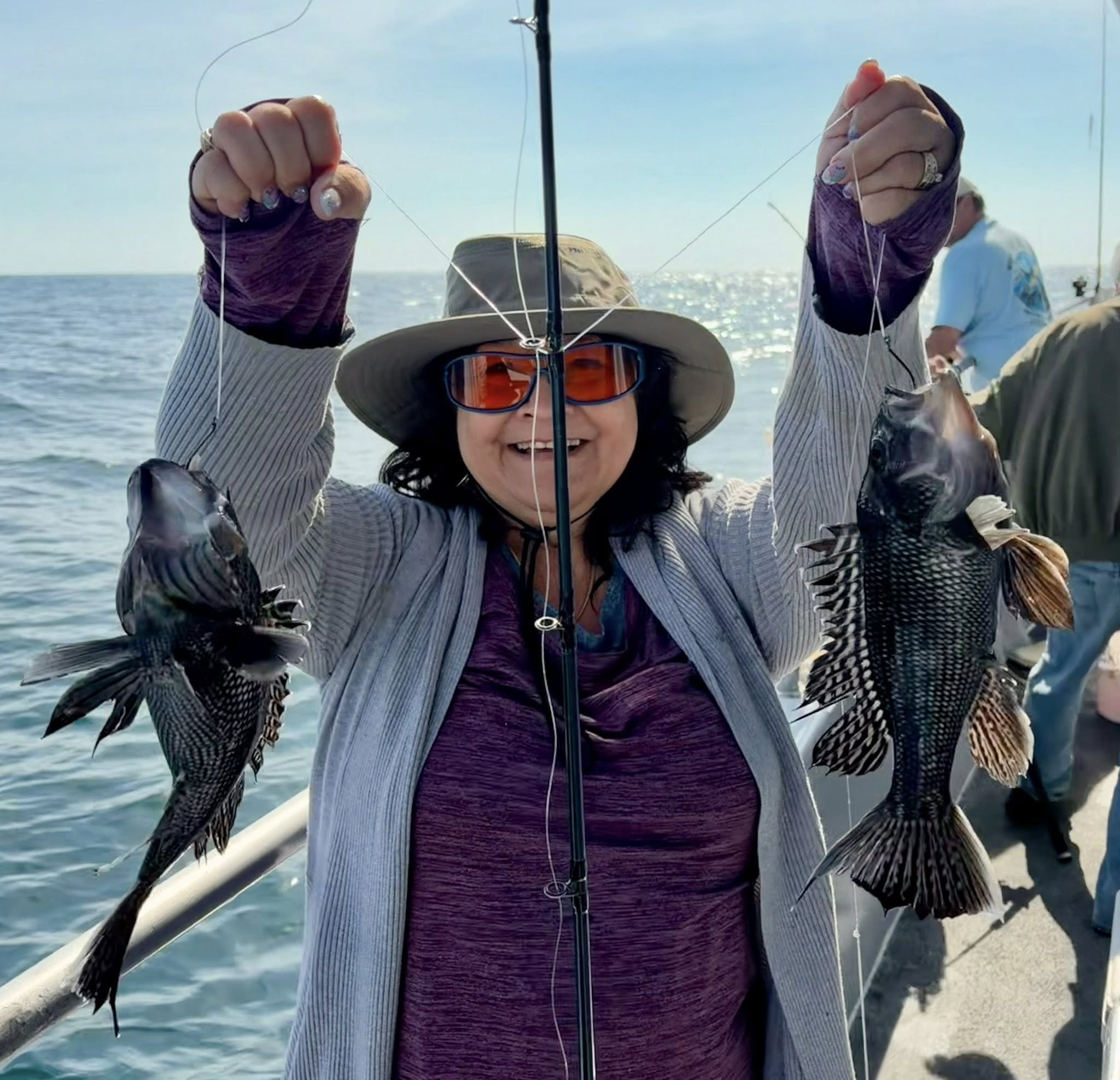
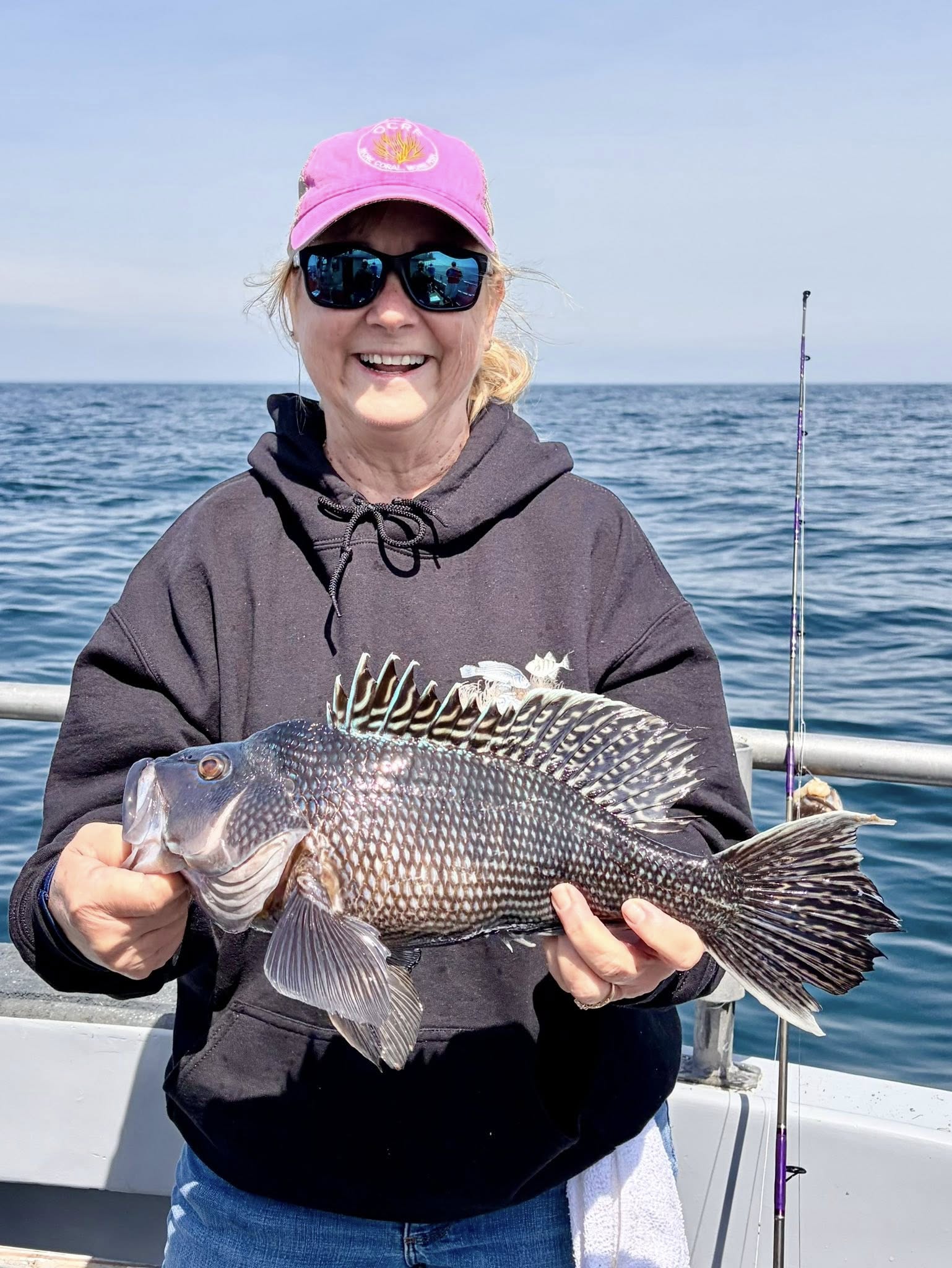
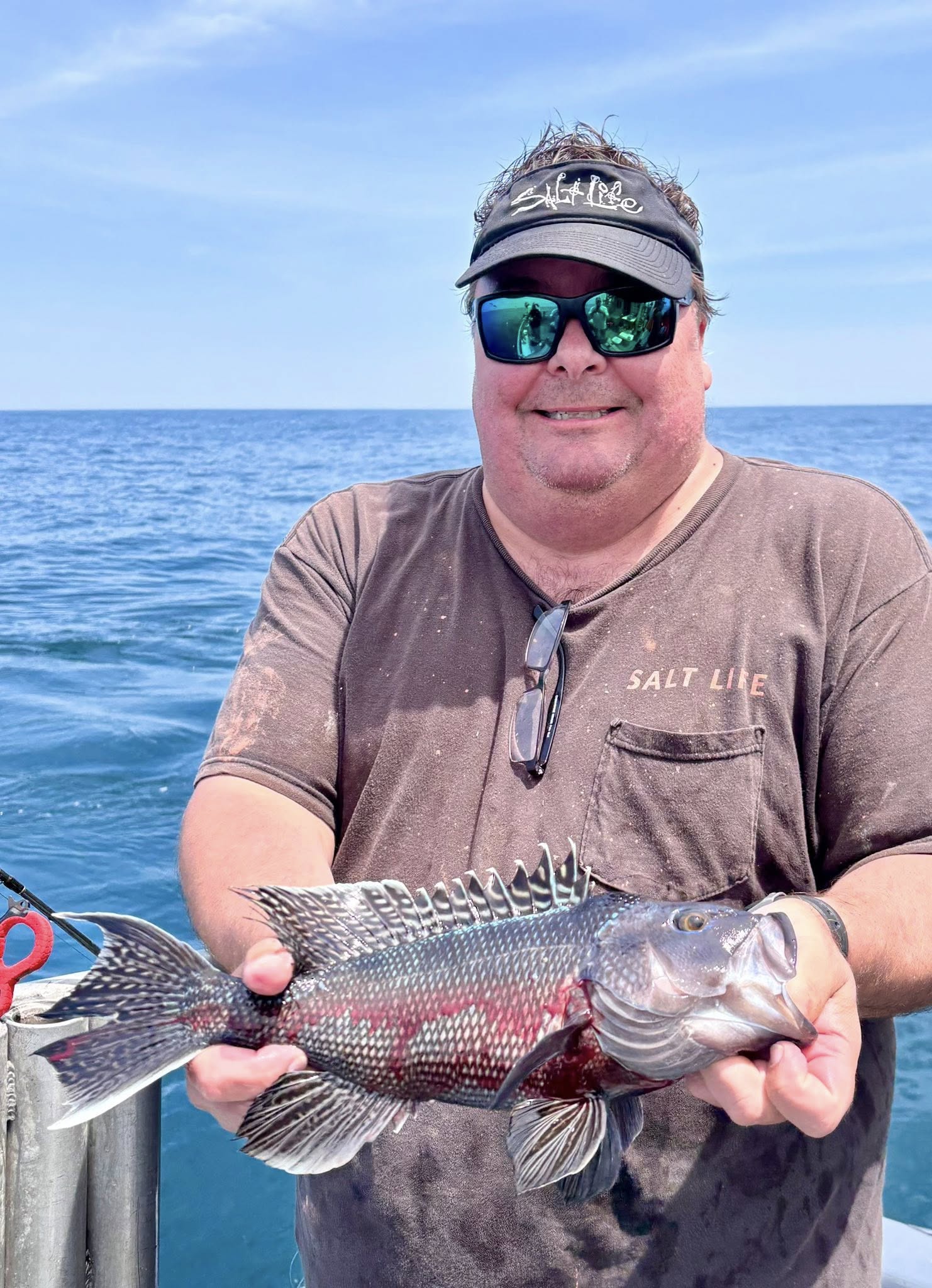
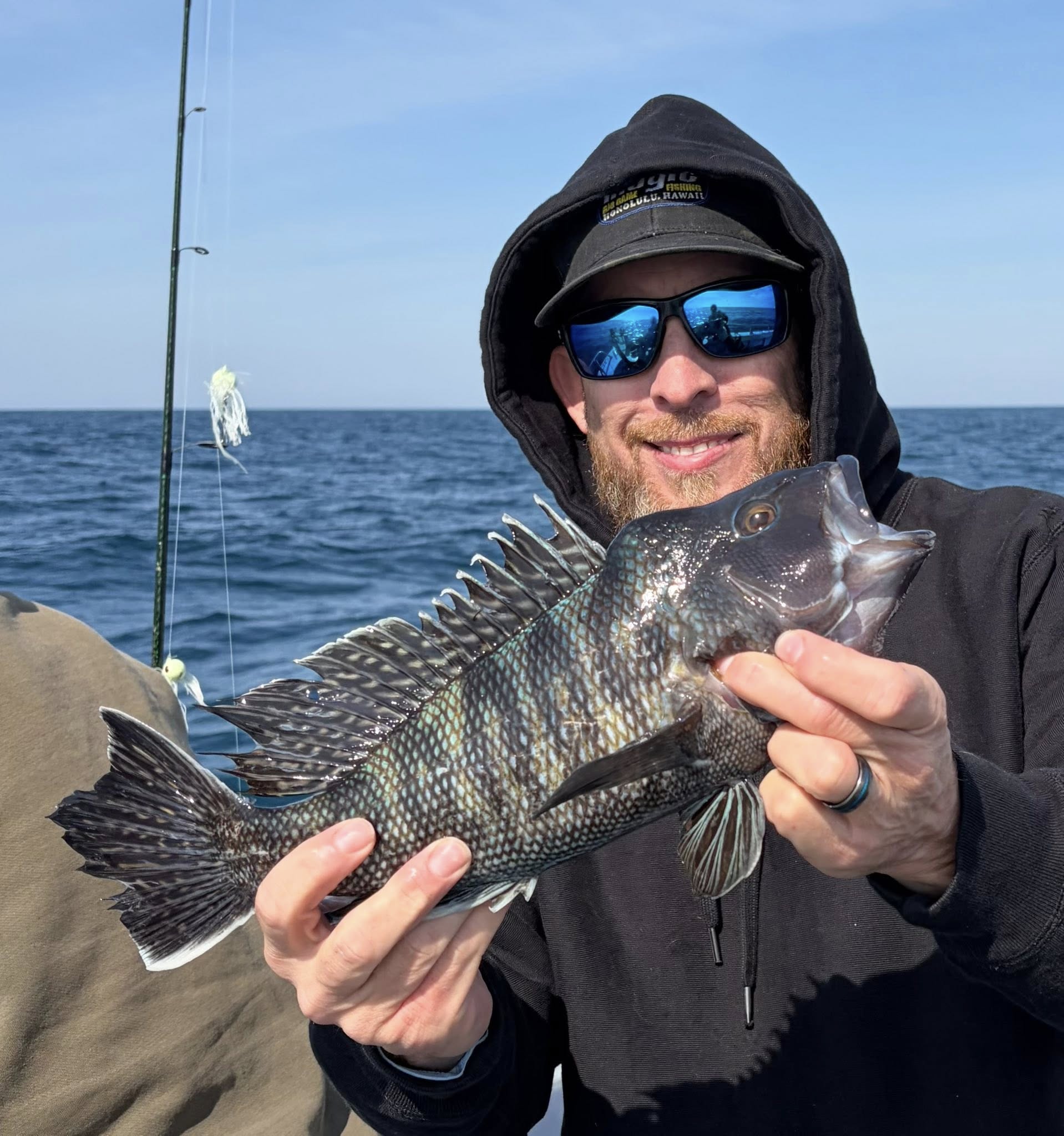
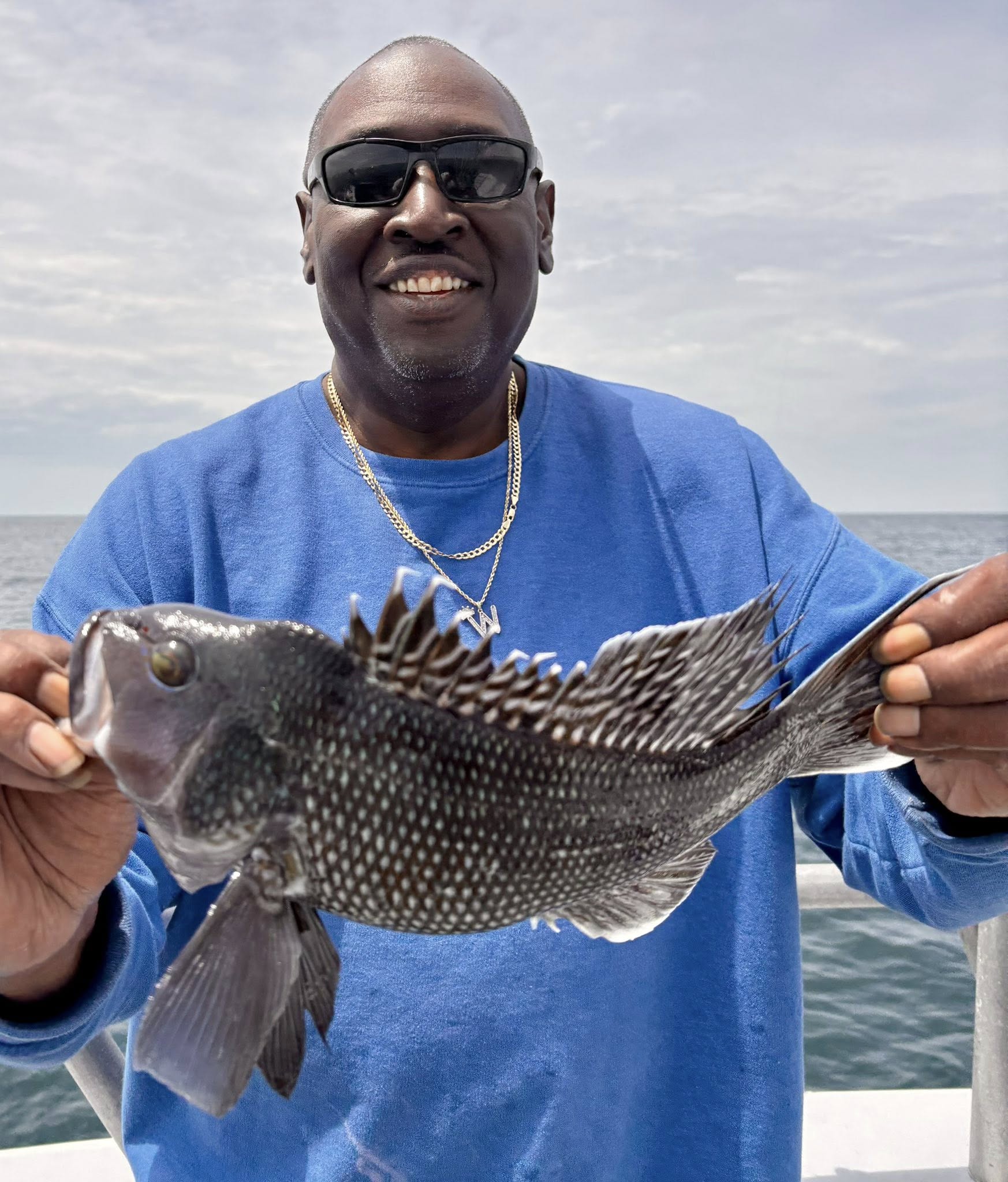
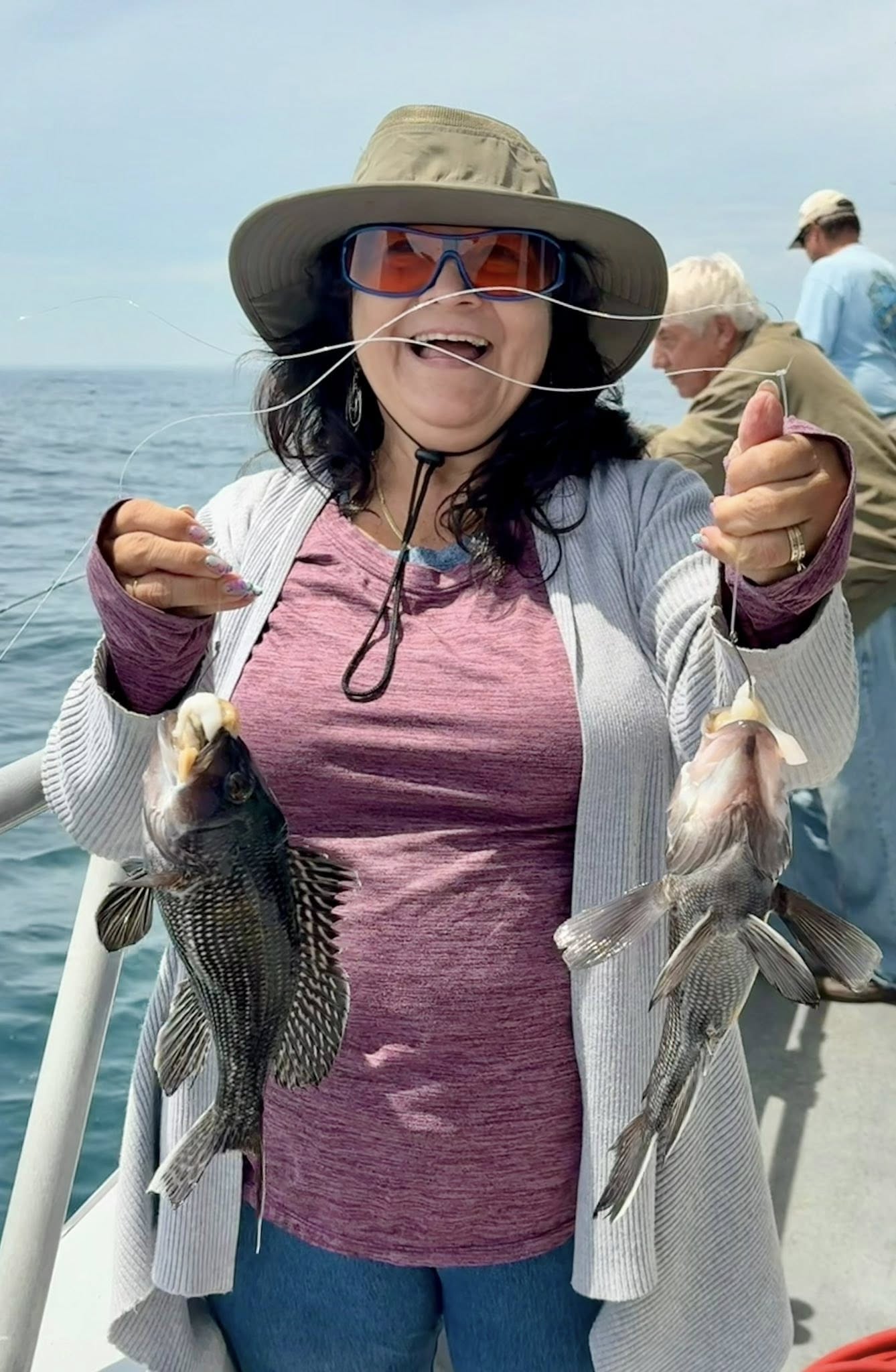
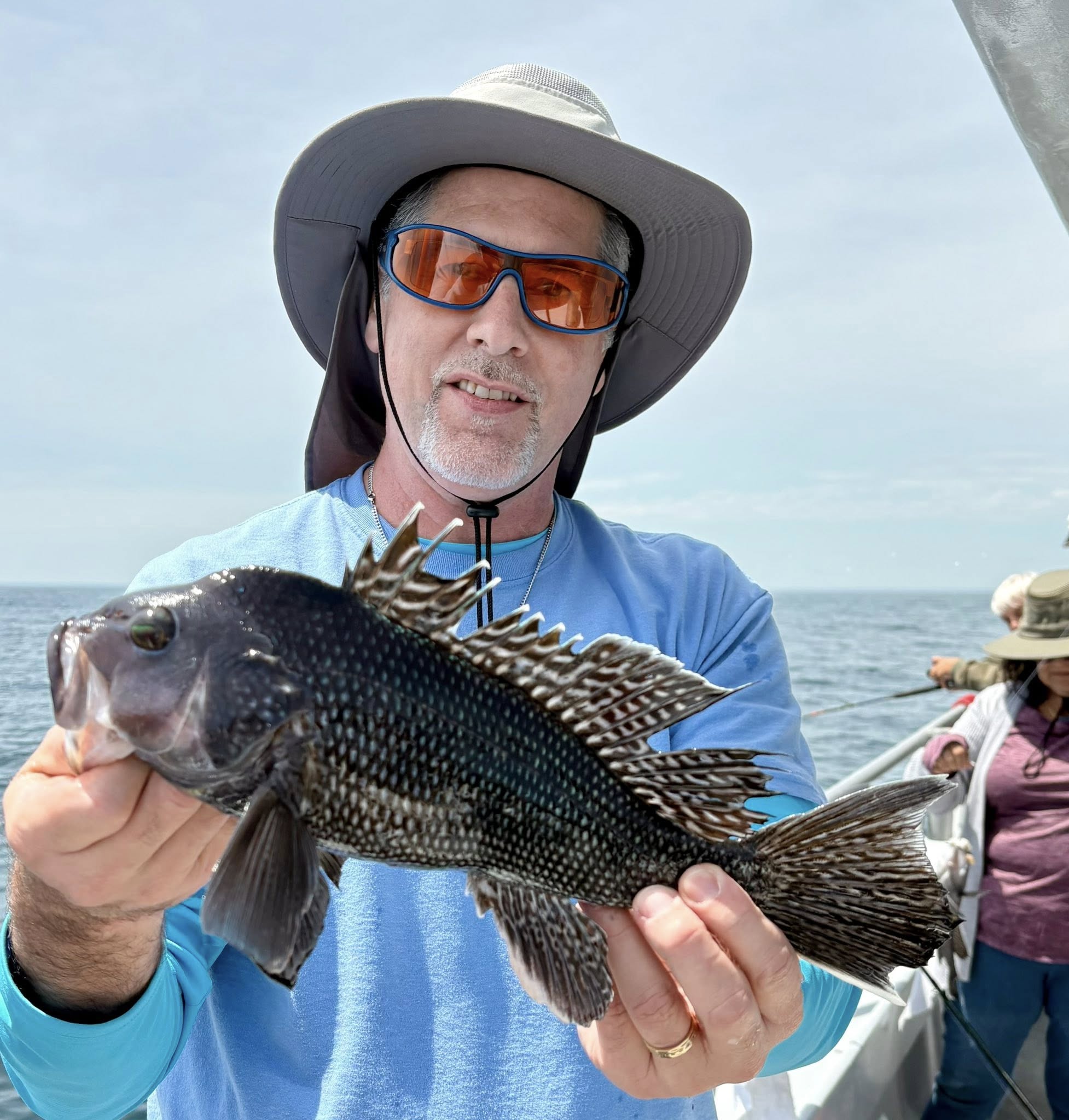
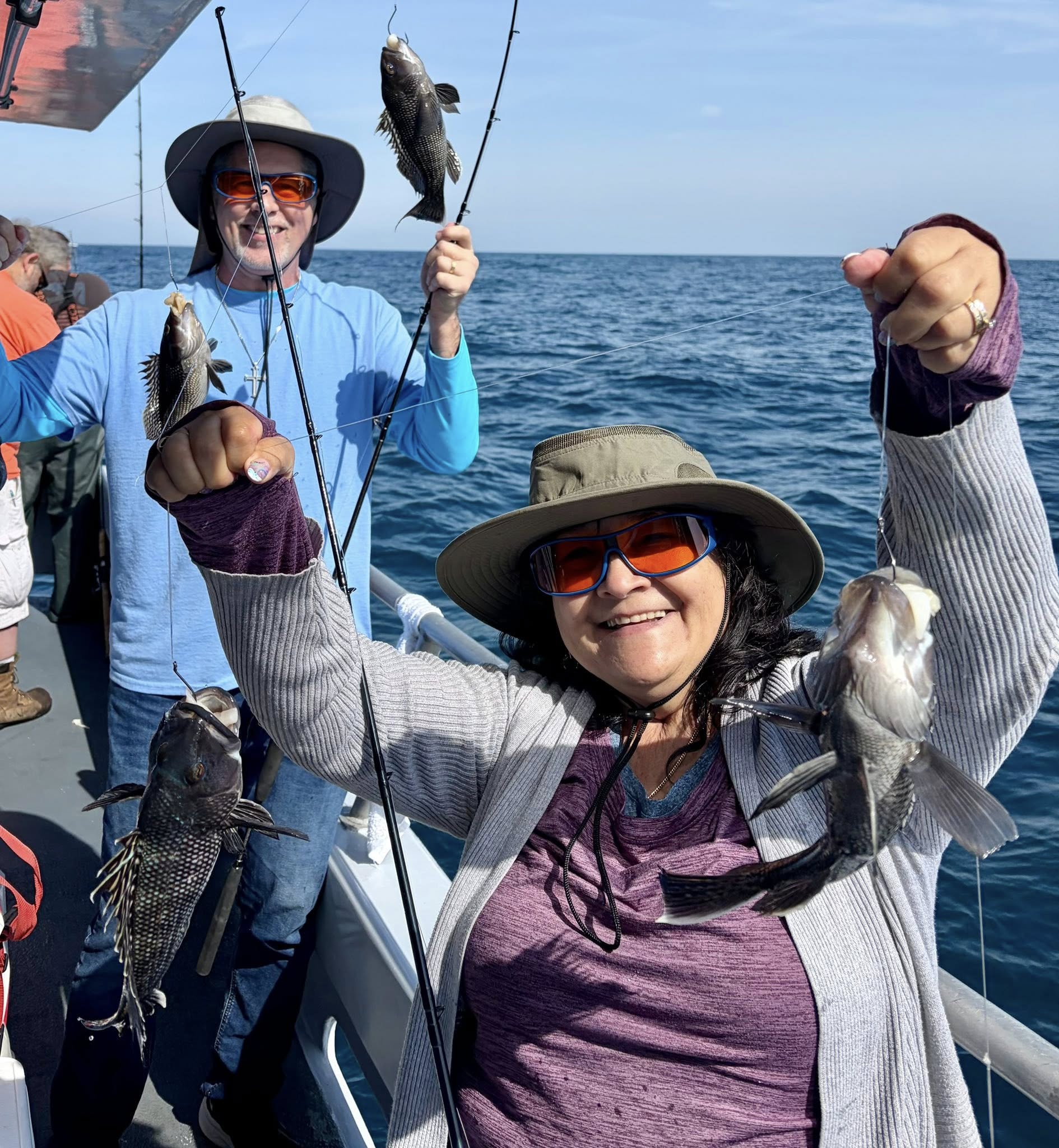
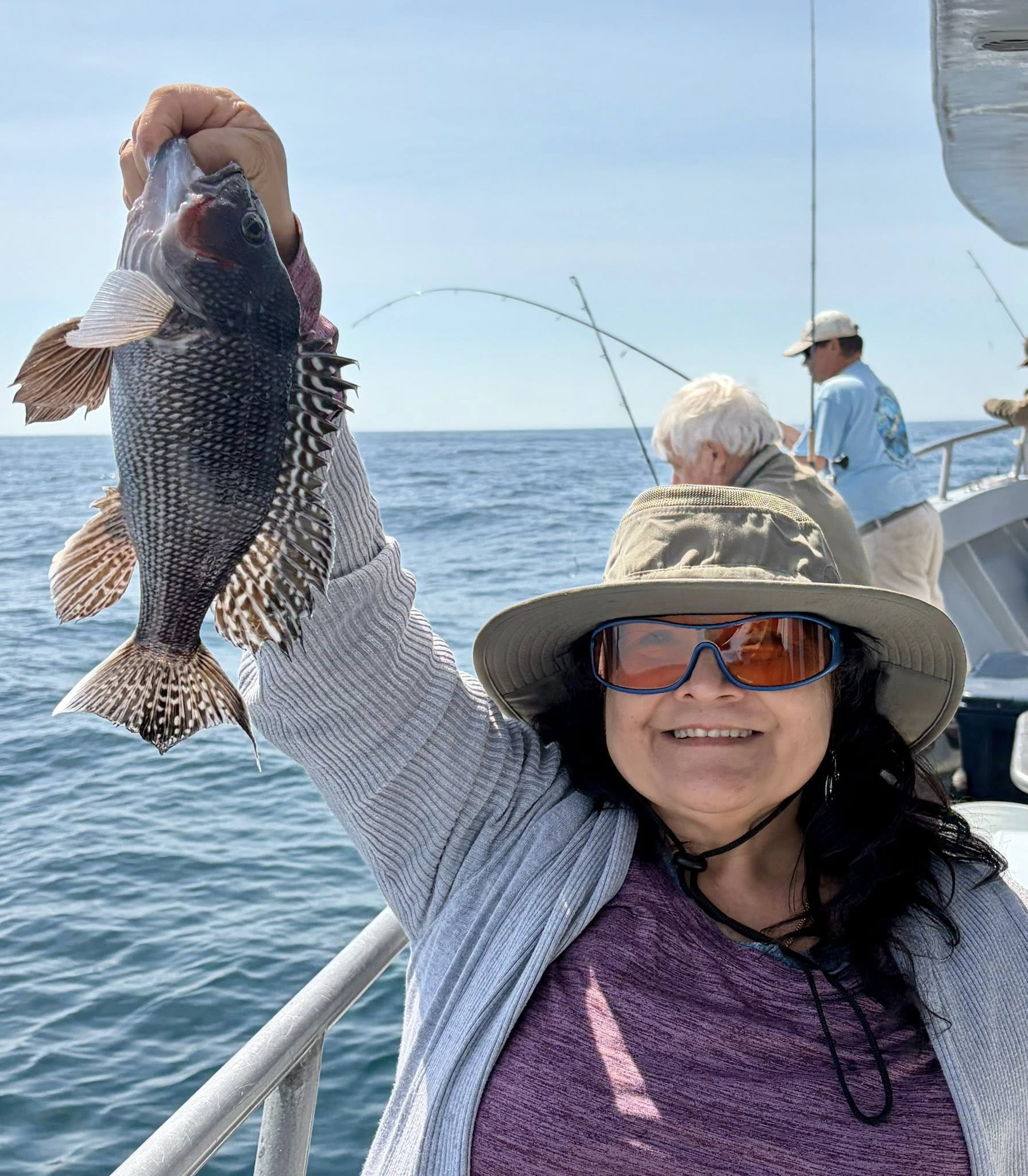
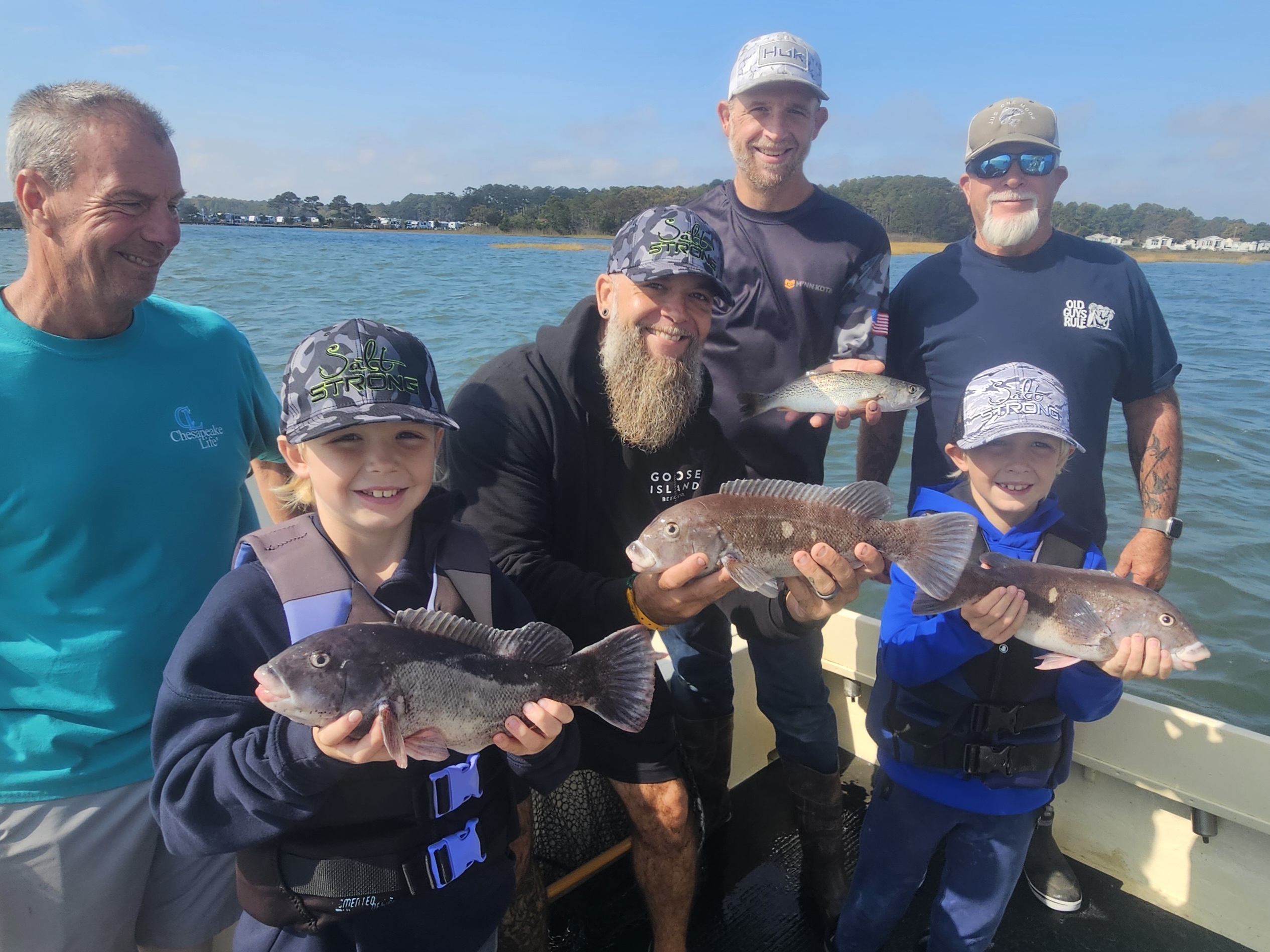
Anglers on fishing on board the Ocean Princess had a great time today with a little better sea bass fishing. There were plenty of keepers around the rail and the first flounder of the season for the Ocean Princess.
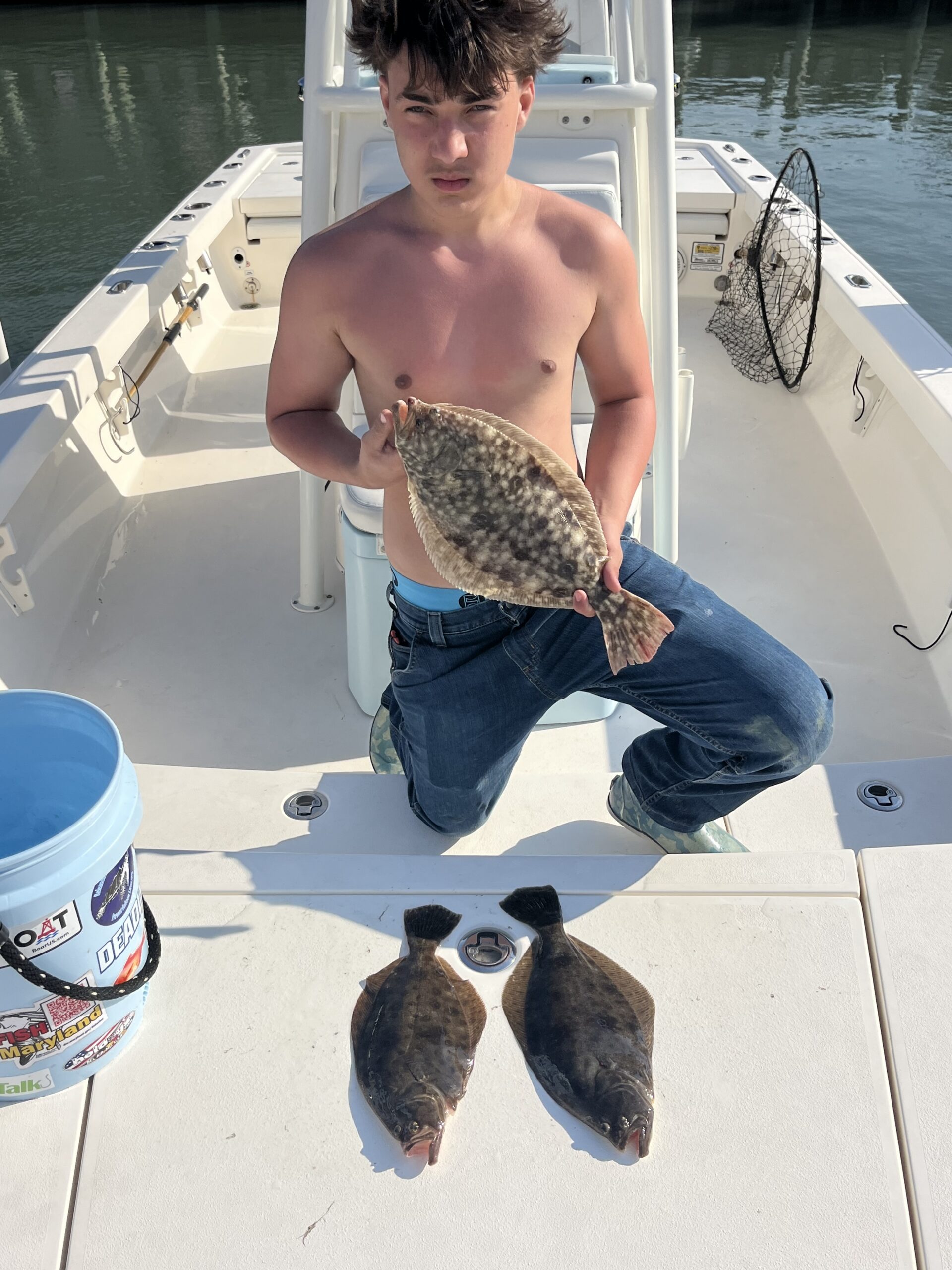
Reece Schindler caught three keeper flounder today of 16 1/4″, 17″ and 18 1/2″. One of the fish came on a Roy Rig while the other two were caught on Deadly Doubles.
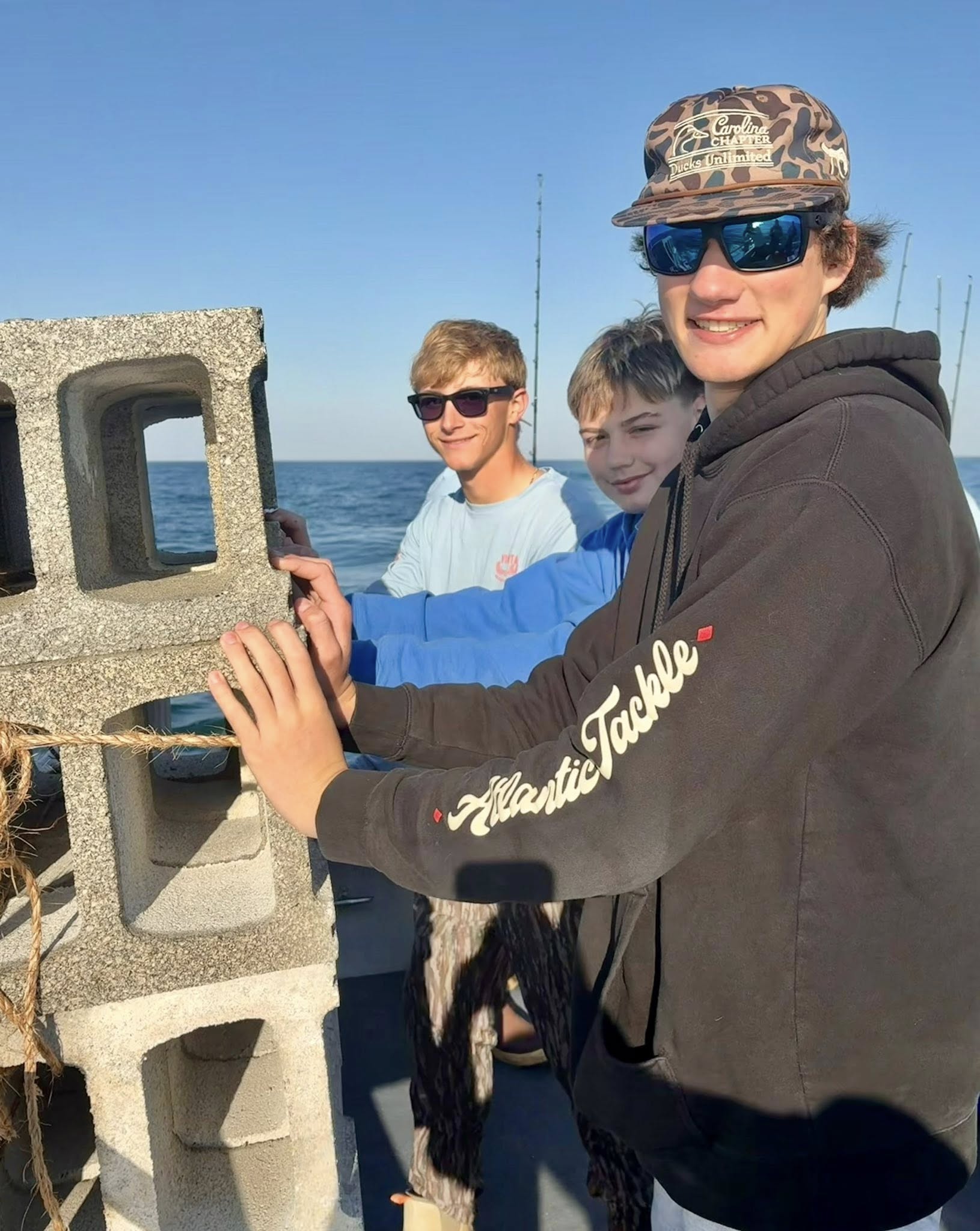
Captain Monty Hawkins of the Morning Star did some fishing and some reef building on today’s trip
Some feeshin,
Some reef building,
Bit of a ramble below..
5/17/26
Was a fine day at sea. Wish keepers had bit better but I did what I could with it. George was high hook with nine – everyone got dinner, including Shelly. The pool was split between Matt & Rick (because Shelly isn’t allowed to play!)
When we got in the boys and I made our new barge ready. (well, almost 8 and still cableing everything down!) Going to go first possible chance – likely tomorrow! (Monday 5/17/26) Sunset Marina is beyond awesome letting us prep our reefs there. We sure don’t want to jam up their dock with a scrap barge over Memorial Day weekend..
All that remains is to lash and cable-down 5 more reef block units. Tow Boat Rob will put pumps on her for safety (it leaks a bit) and get underway. My crew and I will set a 90lb Danforth NE and a 40lber SE for the mooring on our way off tomorrow.
Now the ramble.
I’ve noted repeatedly across the years that when only larger males comprise the sea bass spawning component, they come inshore slower. June is often better than May for sea bass when the population is waning. When it’s up – May is prime time.
But makes the sea bass population swing?
Hmm.. Glad you asked.
Let me walk you through a bit of odd logic.
Everyone with any knowledge of fisheries “knows” the key to spawning production is having lots of Big Old Fecund Females – BOFF.
Well, no.
Given their territorial nature and ability -need really- to switch from female to male?
BOFF isn’t working at all.
Have you ever been fortunate enough to be with a skipper when he found a new spot – a piece of reef or wreck no one’s ever fished? With double jumbos every drop you think, “How lucky am I, we found a huge school of giant sea bass..”
Though less and less now, that’s happened to me numerous times across my 46 years. My anglers remember too. Wasn’t so long ago I found a piece while tuna fishing. Since they weren’t biting I anchored up. Fishing no bait – just jigs – we limited the whole boat in 35 minutes. Not one throw back – nothing under two pounds.
I didn’t really find a ‘school of jumbos’ though. What I’d done is found some manner of structure, be it natural hardbottom or a wreck of some sort, where resident sea bass had returned year after year to grow larger each season after having escaped fishing’s extraction.
The reason “they’re all jumbos” isn’t just because of fishing pressure though. Oh no; it’s because those very large cbass will not allow smaller fish on the reef.
It’s ‘habitat exclusion.’
Youngsters not allowed.
I’ve seen it all my life but only realized its importance this past winter while examining habitat fidelity in sea bass.
It’s this habitat behavior – an innate instinctual behavior that begins as soon as eggs develop into what resembles a sea bass – where even a tiny 1.5 inch sea bass will defend its reef–if now only an oyster shell. It’s a behavior which continues throughout its life.
11 years ago I was predicting the Maryland wind energy area (including survey sound traveling beyond its borders to some 525 sq miles) where sea bass & flounder had vacated the entire area because of survey noise – I’d predicted the area would be recolonized by small male sea bass (the same sub-9 inch fish we saw throughout the 1990s) and a population boon would result.
That’s exactly what happened. Into the early 2020s we very much enjoyed catching limits of sea bass even in high summer. Back then I also predicted once the MD wind area was again repopulated by sea bass equal to or greater than size limit we would see the population fall off again as it had into 2015
..unless management acted to restore spawning production.
But I was pretty sure that wasn’t going to happen.
It was 2006 when I unraveled the mystery of why the incredible sea bassing of the mid/late 1990s which crescendoed in 2003 & then fell off a cliff had happened. We’d been told ‘all sea bass have spawned by 9 inches’ in 1991 and seen it plain. Somedays back then we’d see hundreds of sub-9 inch male sea bass. They’d be all lit up with a bright blue knot on their head – an obvious spawning male.
Probably by 2003 – those tiny spawners were absent. I just didn’t notice right away. Dern sure I noticed the engine that had driven our sea bass stock to amazing height had run out of fuel.
Rats.
With larger males – age 3 and 4 – on every single reef owing the size limit, age one fish perceive no urge to join the spawning class.
Do we have sea bass? Sure. But I want to manage so that we revisit 2003’s population and even surpass it. Were the mechanism recognized it would be cotton-candy.
Just lower the size limit to 11 inches.
Oyyyy.. It cuts against the grain of established science fiercely.
For twenty years I thought it was just this simple: without age one fish spawning we eliminate 70% of the spawning population. Of course spawning production collapses.
But No, it’s worse than that.
Looking at scientific works last winter – work going across months in the last decade – I saw few sub-9 inch sea bass at all.
I’m sure we once caught more small sea bass in a week than we catch in a decade now.
That’s a true statement.
Same reefs, same bait, same places (if a few more owing our reef constructions) – the size class that once dominated the inshore sea bass fishery is no more. (In Fish Report 4/3/26 I write this using lots of data – a deep dive indeed – can send it to you if you’d like.)
Not only are there virtually no under 9 inch males anymore – there are precious few 9 inch sea bass at all.
Where we often caught thousands in a day – now not a hundred a year.
It’s because size limit fish are defending their habitat – youngsters not allowed.
Habitat Exclusion.
We had scads of undersized sea bass just today.
But not one under 9 inches – not a single age one fish.
Fisheries scientists and managers use ‘catch estimates’ to judge how healthy the sea bass population is. They think everything is quite peachy because their MRIP rec catch estimates are so inflated.
I use actual catch. My clients’ catch.
Scientists could use real data too but have steadfastly refused the information everyone with a sea bass permit sends in since 1997 when it became mandatory to tell NOAA what we’d caught.
Promise – using MRIP’s ‘recreational catch estimate’ data has built a giant house of cards.
It’s going to fall.
As reefs became unbelievably crowded with sea bass in the 1990s, spawning at age one continued apace inshore (inside 15 fathoms) because recreational pressure kept culling larger fish via smaller size limits of 9/10/11 inches. Further offshore more sea bass escaped fishing pressure and often grew to five pounds or more. we
Back then I could tell how much fishing pressure a reef/wreck was getting by how small the smallest males were.
There was no bag limit in early management – yet the DelMarVa sea bass population skyrocketed.
Then, in 2002, we went to a 12 inch size limit.
How the trick is accomplished I do not know, but by having that large a fish on all reefs/wrecks the natural impetus to spawn in age one is shut.
If larger and larger size limits drove production Buzzards Bay would be impossibly loaded with sea bass. Instead, with 15 and 16 inch size limits their CPUE (catch per unit of effort) has been in steep decline.
Same with the sea bass fishery below Hatteras. They went to a 13 inch limit years ago and cut the creel limit to just 7.
Did these populations thrive with such draconian regulations?
No, they sure didn’t.
Fish instinctually act to ensure resources are preserved. That’s why smalls are kept off their reef habitat — and All marine reef habitat has size limit sized fish playing ‘King of the Hill.’
When the size limit went above 11 inches we not only curtailed spawning production by eliminating all age one and many age two spawners – but we also severely limited recruitment of those same year classes.
I sure hope management grapples it soon. When they do we’ll be at astounding new population highs inside seven years.
It was a little breezy today out of the south which made it WAY warmer than it should have been. Tonight into tomorrow the wind switches to the north and it’s really going to cool things… READ MORE
Crab Pie Ingredients 1 Pound jumbo lump crab meat 2 Deep Dish Pie Crusts (this recipe will make 2 pies) 1/4 cup of diced onion (or shallots) 8 oz of Swiss cheese 2 Tablespoons flour 3… READ MORE